
Engagement ringsin Hatton Garden.
What to look for, what to ask, and how to buy well on London's jewellery street — written by the bench, not a sales floor.
Buying where the rings are actually made
Hatton Garden is London's jewellery quarter — a few streets where setters, polishers, mounters and diamond dealers still work side by side. That matters when you are buying an engagement ring, because you are far closer to the people doing the work than you would be on a high street.
It also means the quality of your experience depends almost entirely on who you walk in to see. This guide is what we tell first-time buyers who sit down at our bench: how the 4Cs actually behave, when bespoke is worth it, and the questions that separate a fair jeweller from a persuasive one.
Everything we make is designed, set and finished by hand at our Hatton Garden bench — never sent abroad — and we see one client at a time, so nothing here is written to hurry you.
Four grades — but they are not equally important
Cut
The only C that is entirely down to human workmanship. Cut controls brilliance and fire. Two stones with identical carat, colour and clarity can look completely different because of it — always prioritise cut.
Colour
Graded D (colourless) down the alphabet. The differences are subtle to the eye once a stone is set, especially in yellow or rose gold, so there is often value in going a grade or two below the top of the scale.
Clarity
Refers to natural inclusions inside the stone. What matters is whether they are visible to the naked eye — an 'eye-clean' stone with a modest clarity grade can look identical to a far more expensive one.
Carat
Weight, not size. Carat is the figure most people fixate on and the one that moves price fastest, particularly at round numbers. Sitting just under a milestone weight can buy you a noticeably better cut.
If you want to see how these grades move price in practice, our gemologists will hand-source certified stones to your spec — just get in touch with your shape, carat, colour and clarity.
Bespoke or ready-to-wear
Bespoke
Designed with you from a blank page — your stone, your setting, your proportions. Best if you have a clear idea, an heirloom stone to reuse, or you want something that does not exist on a shelf.
Takes longer. Needs a consultation first.
Explore bespokeReady-to-wear
A finished piece you can see, try and take away. Best if you are working to a short timeline or you want to be certain how it looks on the hand before you commit.
Faster. Still sizeable and adjustable.
View fine jewelleryFive steps to buying well
- 01
Set a real budget first
Not a rule-of-thumb multiple of anyone's salary — a number you are genuinely comfortable with. Tell your jeweller the figure. A good one will build the best possible ring inside it instead of walking you upwards.
- 02
Choose the shape before the specs
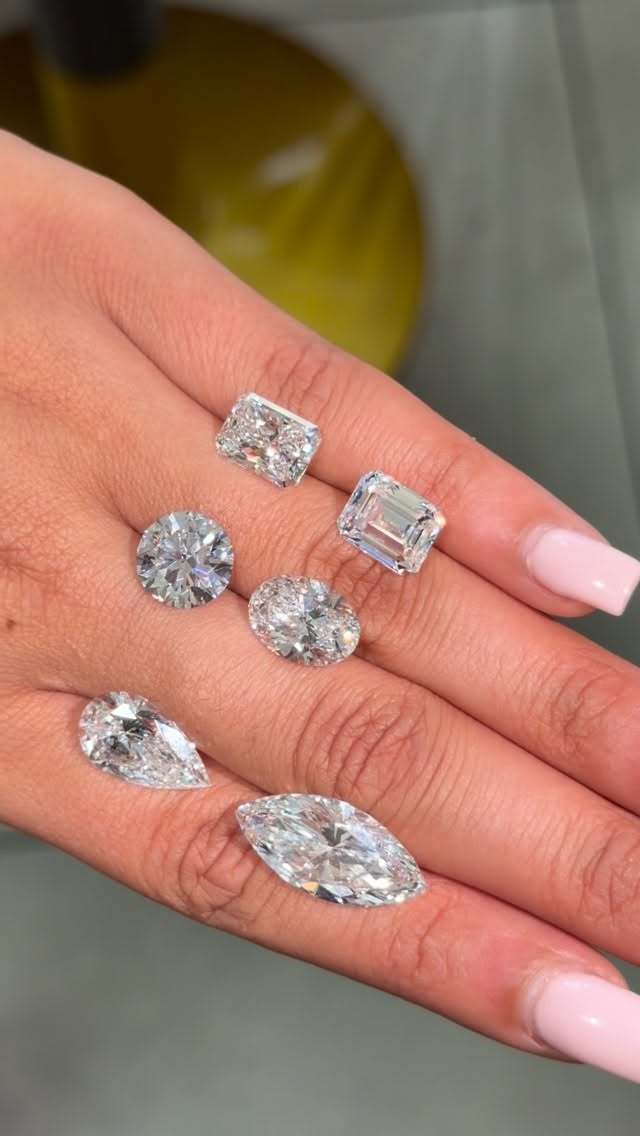
Round, oval, emerald, pear and cushion all wear very differently on the hand. Shape is the decision that most affects how the ring looks; the grading specs come afterwards.
- 03
Ask to see the certificate
An independent grading report from a recognised laboratory should accompany any significant stone. Read it, and ask the jeweller to walk you through what each line means and where the inclusions sit.
- 04
Compare stones side by side
Paper grades only get you so far. Two stones with the same report can look different in daylight. Ask to see options together, in the same light, before deciding.
- 05
Confirm what happens afterwards
Resizing, cleaning, rhodium plating and setting checks all matter over a lifetime of wear. Ask what is included and who does the work.
Common questions
- Why buy an engagement ring in Hatton Garden?
- Hatton Garden is London's jewellery quarter. Buying here usually means dealing closer to the bench — the people setting and finishing the ring are often in the same building — so you can ask direct questions about the stone, the metal and the making, rather than buying a finished item from a retail floor.
- Which of the 4Cs matters most?
- Cut. It governs how the stone returns light, and a well-cut diamond will look brighter than a larger stone with a weaker cut. After cut, most buyers get the best value by easing back slightly on colour and clarity rather than on carat.
- How long does a bespoke engagement ring take?
- Allow several weeks from first consultation to finished ring — design, stone selection, casting, setting and finishing all take time. If you are working to a date, tell us at the first appointment so we can plan around it.
- Do I need an appointment?
- Yes. We see one client at a time by appointment so the salon is private and you are never rushed or overheard while discussing budget.
Book a private viewing
One client at a time, by appointment, at our Hatton Garden bench. Bring a budget and an idea — we will show you what is possible inside it.
Book an appointment